27.09.2026
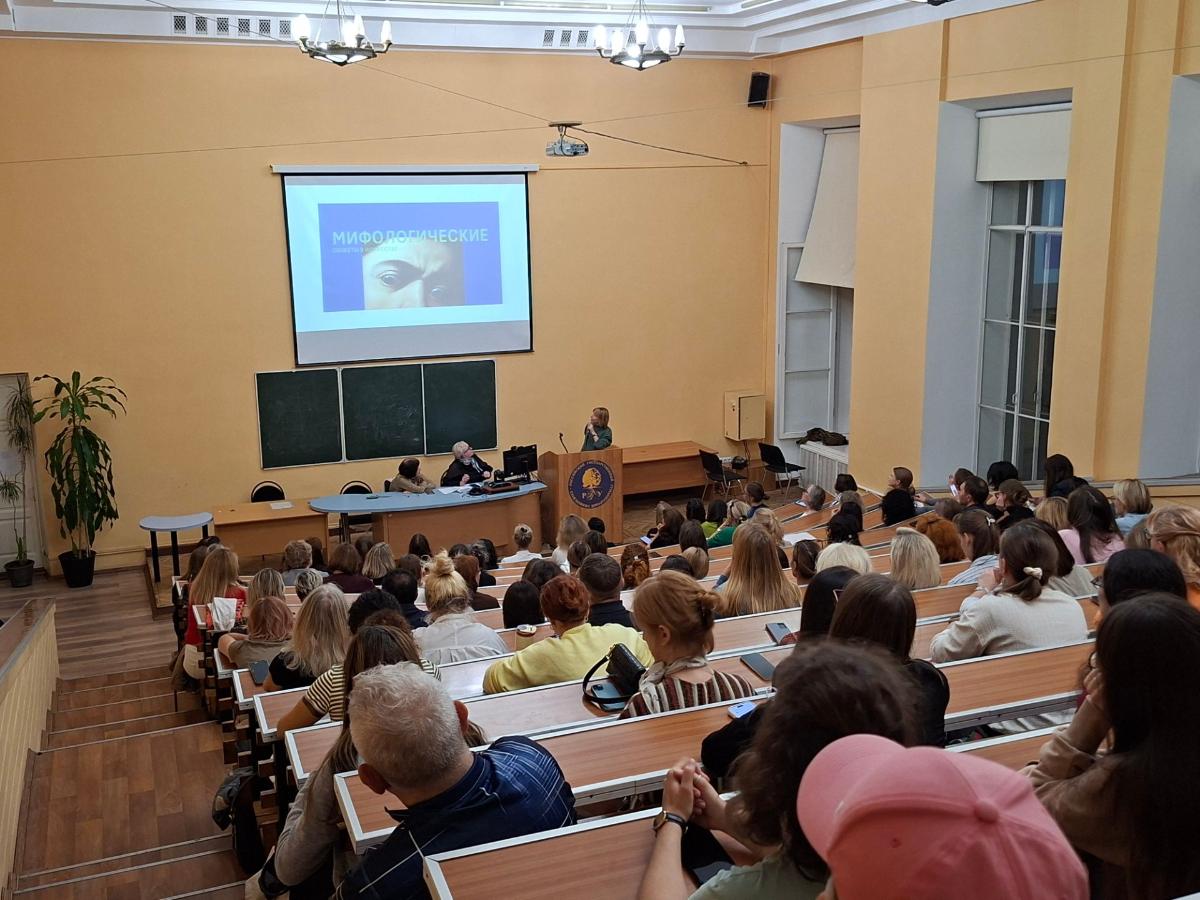
On September 21 and 24, RSUH hosted presentations of professional retraining programs in psychology and art history, attended by more than 200 people.
The retraining programs have been offered by the RSUH Institute of Continuing Education for more than 35 years. Their content and range of courses are updated annually to reflect the needs of modern society and current trends in psychology, counseling practice, the art market, museum and exhibition activities, and other fields. Professional retraining makes it possible to acquire a new specialization and an additional qualification within a relatively short period of 1–1.5 years. The programs are open both to individuals who already hold a higher education degree and to undergraduate and graduate students. Tuition discounts are available to these students, as well as to RSUH graduates and employees.
“Clinical Psychology” is the most extensive program. It lasts three semesters and leads to the qualification of clinical psychologist.
The “Personality Psychology” program provides comprehensive training in psychology and introduces students to the principal methods of working with individuals aimed at harmonizing their relationships with the world and themselves.
Participants in the “Psychology and Pedagogy in Education” program attend lectures and practical classes covering psychological work with preschool and school-age children, family psychology, support for foster families, children with disabilities, and other related areas.
Those interested in studying the stages of human development, from the perinatal period to late adolescence, and learning how to provide psychological support for a child's harmonious development will find these topics covered in the “Child Psychology” program.
Both programs include practical training in children's educational institutions. Upon completion, graduates receive the qualification of educational psychologist.
The art history presentation introduced two programs offered by the RSUH Institute of Continuing Education: “General History of Art” and “Attribution of Antiques and Works of Art.”
Faculty members described the courses included in each program. “General History of Art” is designed to provide participants with a comprehensive understanding of the development of Russian and international art from Antiquity to the present day.
The “Attribution of Antiques and Works of Art” program trains specialists in the attribution and expert evaluation of art objects, antiques, and works of art.
Both programs include visits to Moscow museums, exhibitions, and other art events accompanied by faculty members.
Many graduates of these programs have changed their professional fields and devoted their careers to art history. They have become curators of museum collections, guides at museums in Russia and other countries, organizers of art projects and exhibitions, employees of art galleries, antique collectors, and experts in antique appraisal.
Enrollment in the programs is ongoing. Further information is available on the website of the RSUH Institute of Continuing Education.


