28.11.2025
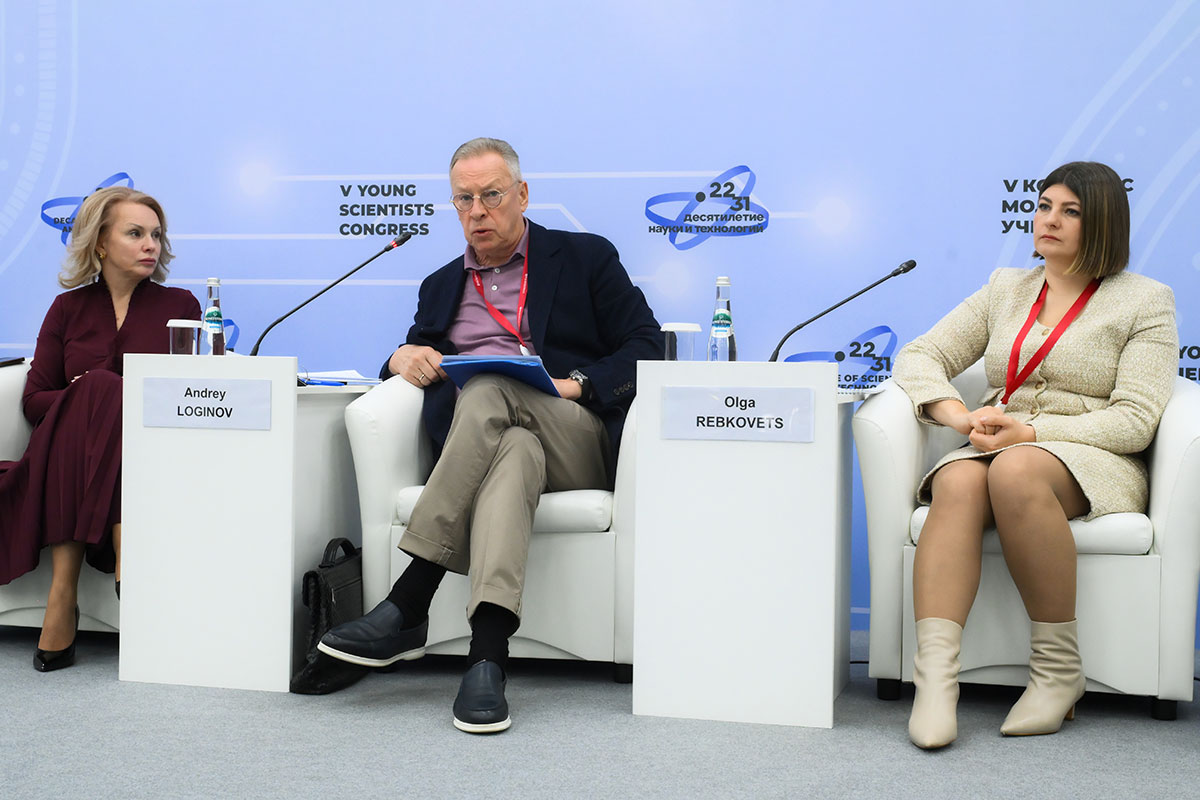
In a multipolar world, the Russian language must take its rightful place among other international languages, becoming a tool of scientific cooperation and diplomacy. This viewpoint was expressed by RSUH Rector Loginov during the 5th Congress of Young Scholars.
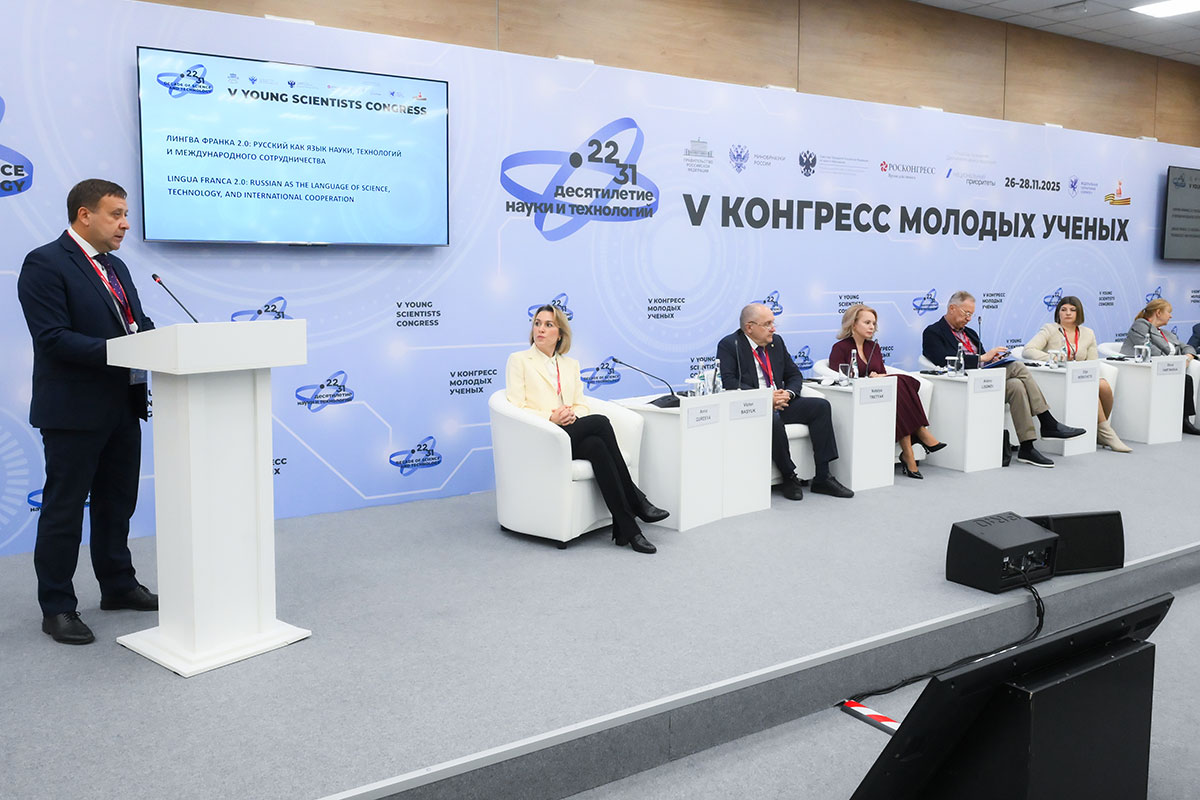
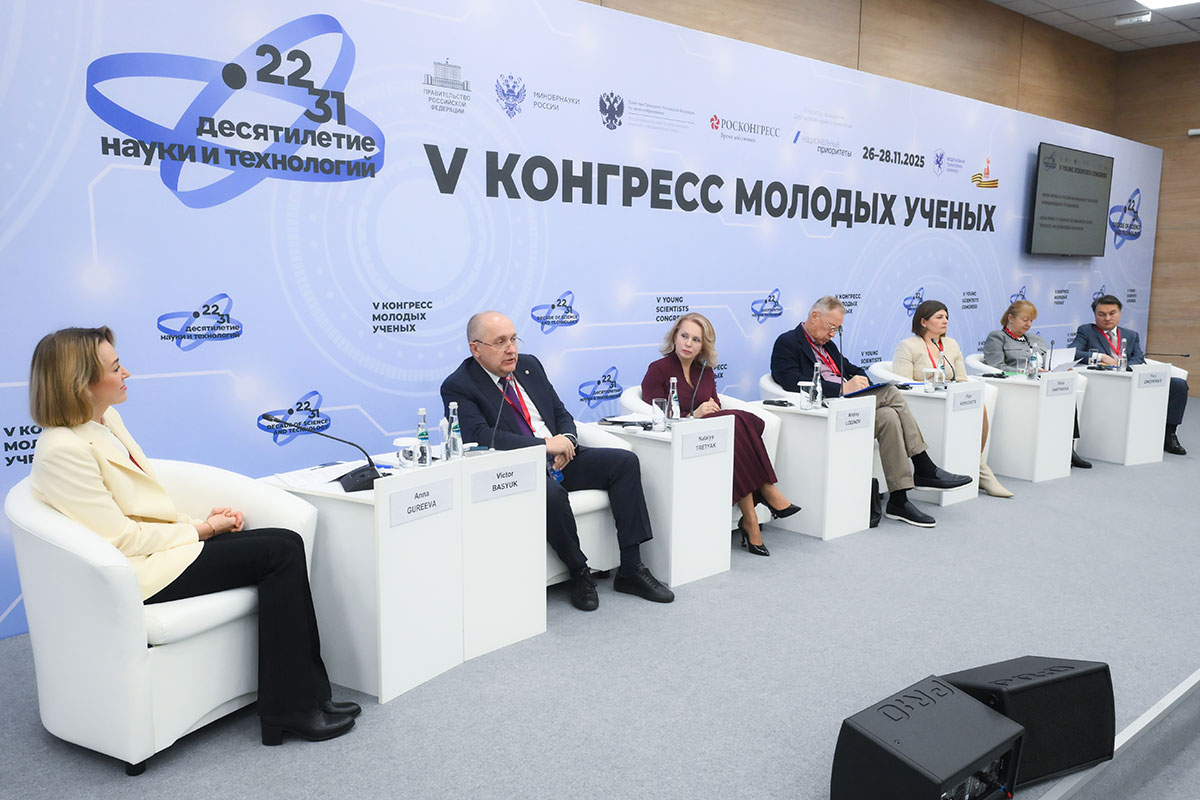
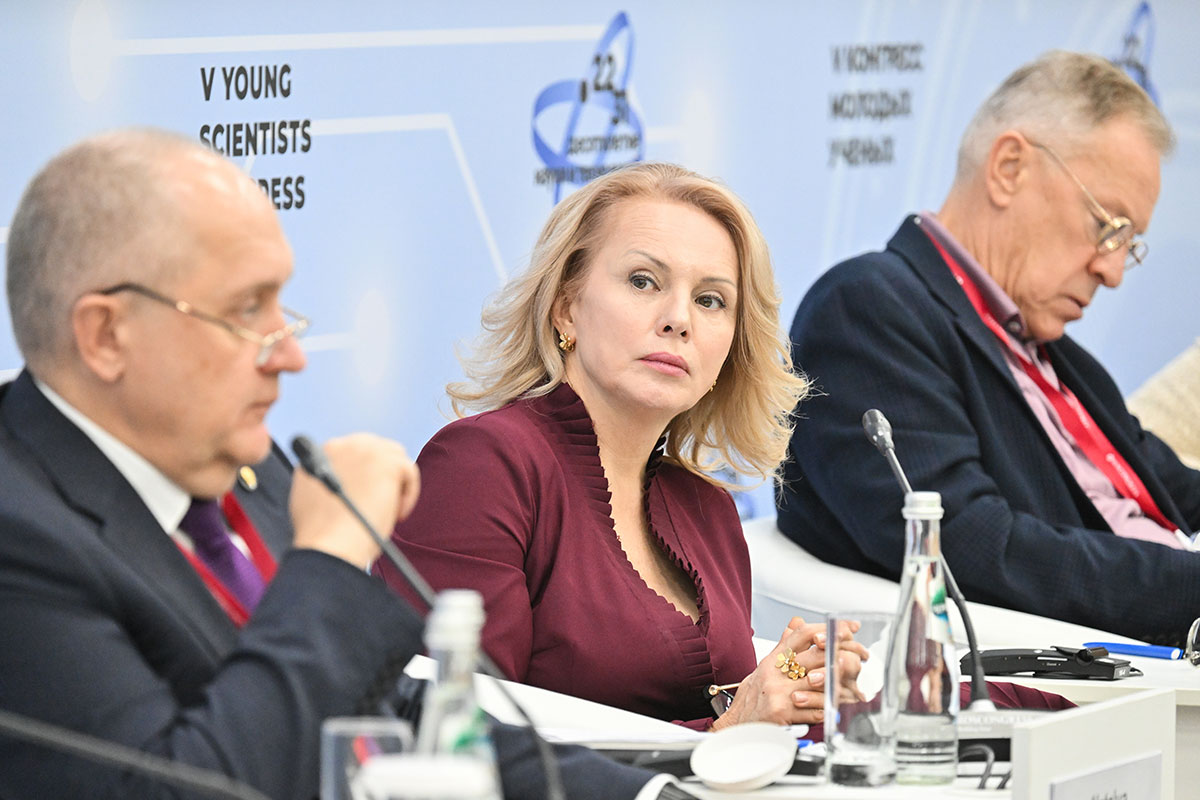
Rector Loginov took part in the strategic session “Lingua Franca 2.0: Russian as the Language of Science, Technology, and International Cooperation” at the 5th Congress of Young Scholars. Representatives of Russian universities, the Russian Academy of Sciences, and the Russian Academy of Education discussed how to expand the use of the Russian language in international science, business, and diplomacy. Participants proposed concrete measures to strengthen the influence of Russian as an instrument of “soft power.” Particular attention was given to the question of how to reveal the richness of the Russian language in order to strengthen international partnerships and promote an objective image of Russia in the world.
Rector Loginov emphasized that throughout human development, civilization had relied on two fundamental pillars—language and the written word. According to him, in a multipolar world many countries are moving away from the dominance of the English language in favor of protecting their national languages, thereby addressing issues of identity and cultural preservation. Russia, in this sense, is an ideal example.
“Our attitude toward history and traditions shows other countries the direction of movement, and this is the foundation of our ‘soft power’ for the future. Our main goal is not to displace English, but to find a unique niche for the Russian language. And this search is proving quite fruitful: Russian is the language of modern science, technology, and high culture. We need to identify these niches, establish ourselves in them, and compete with Chinese, Arabic, Hindi, and other languages that also claim a significant role in the new multipolar world. And state support is indispensable here,” concluded Andrei Loginov.