28.04.2026
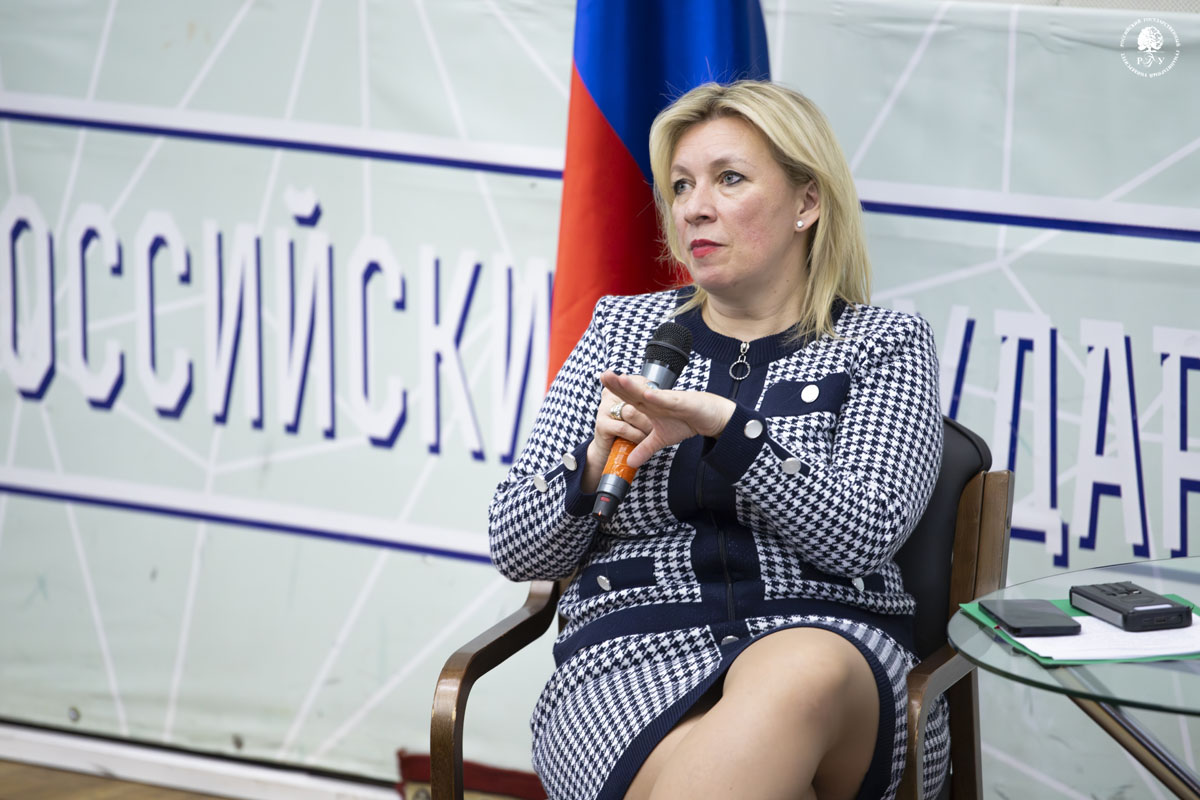
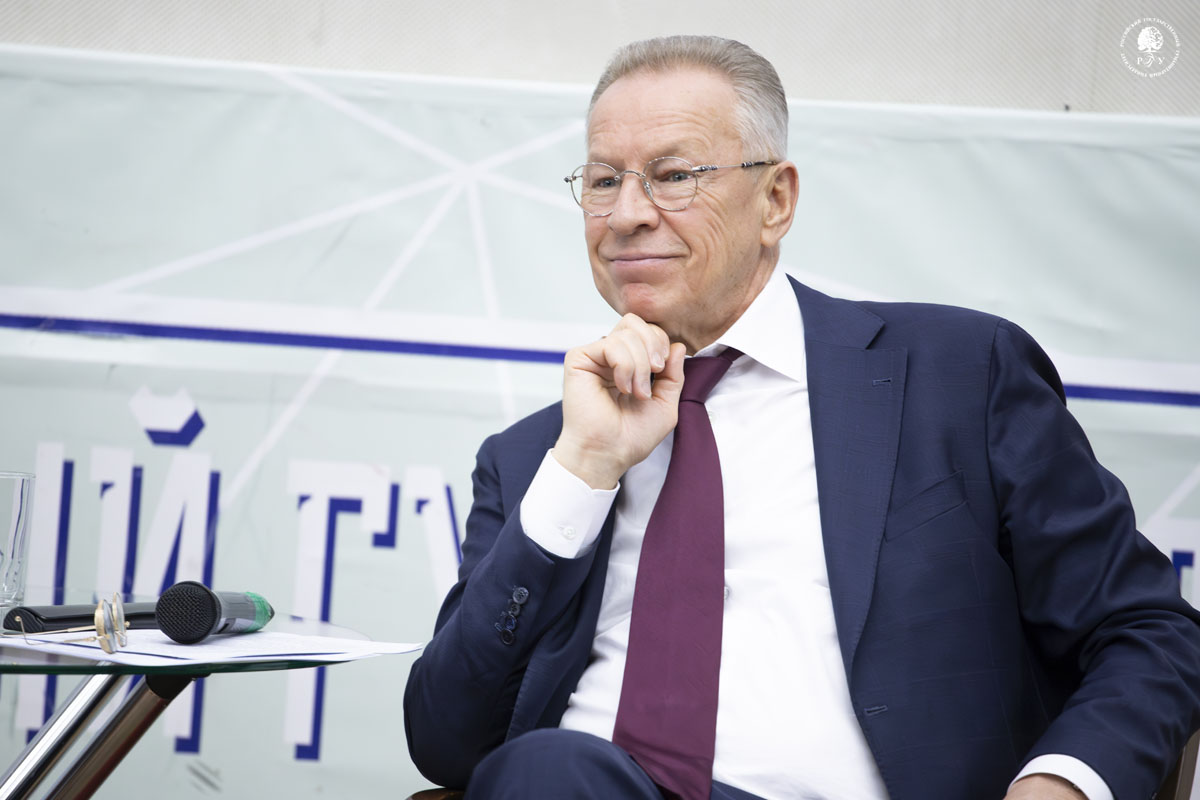
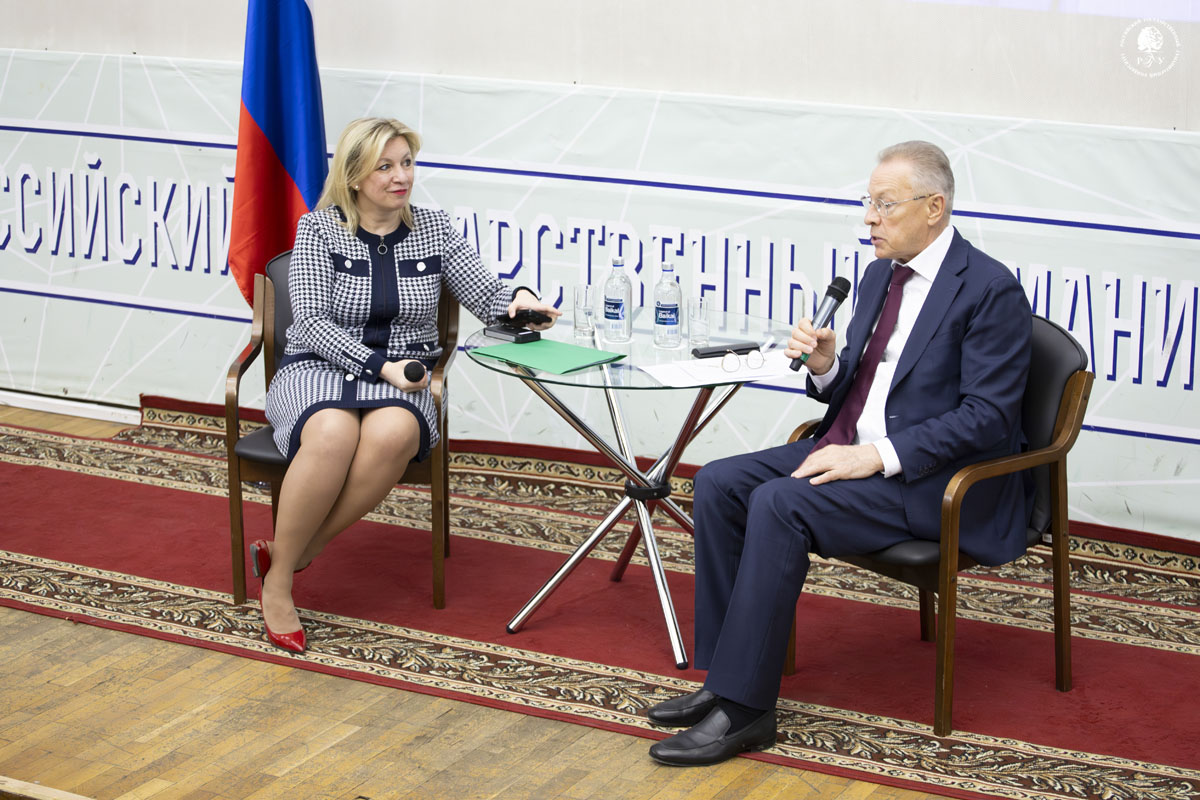
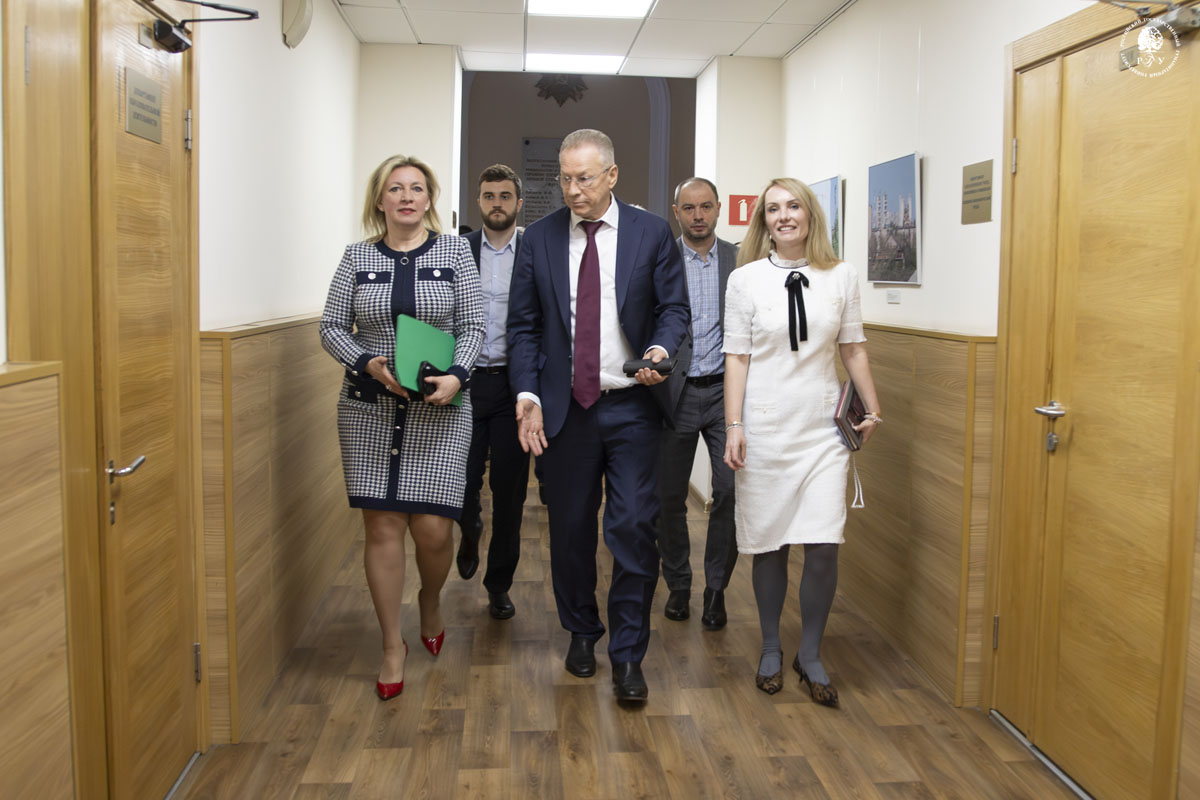
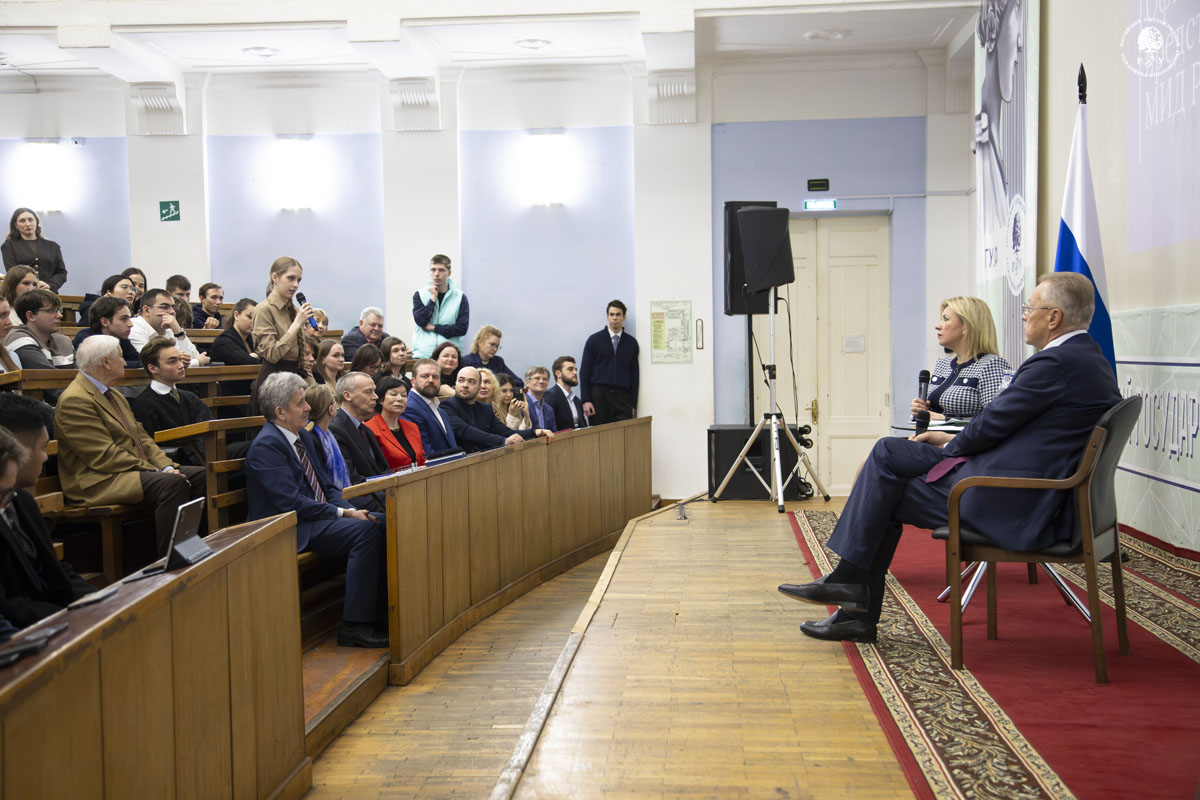
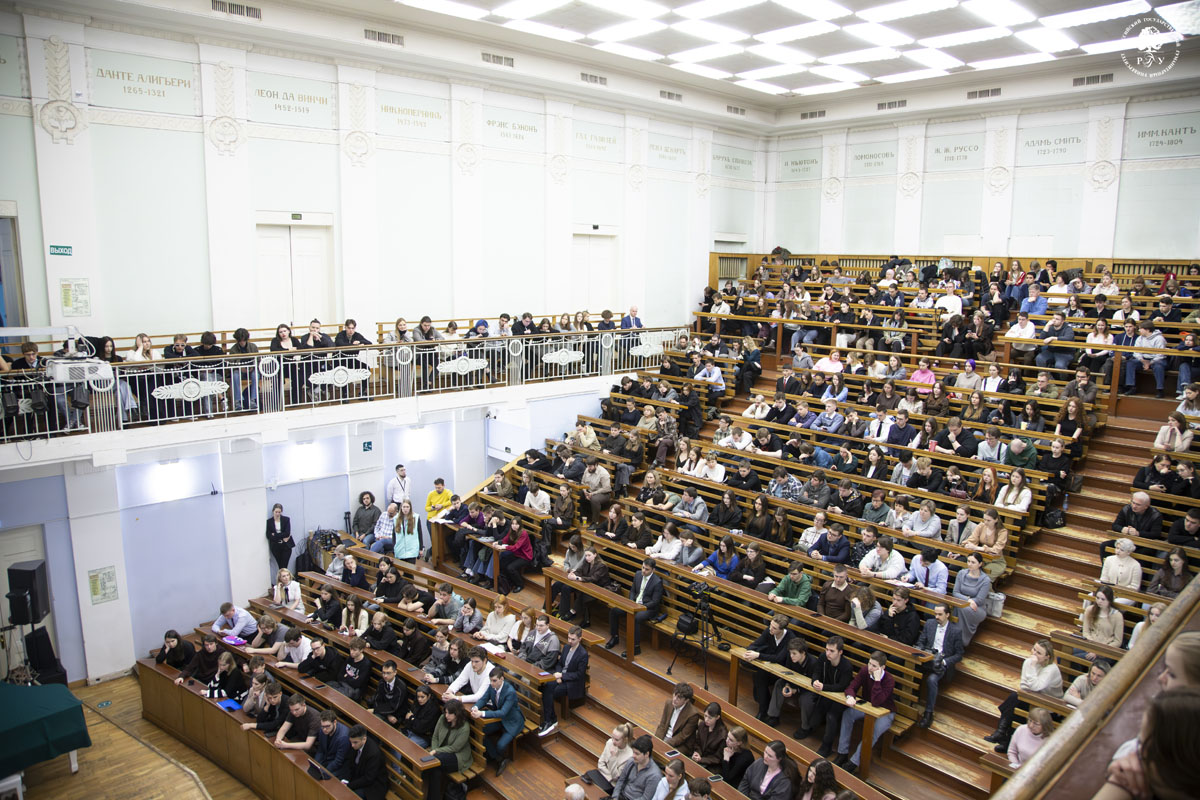
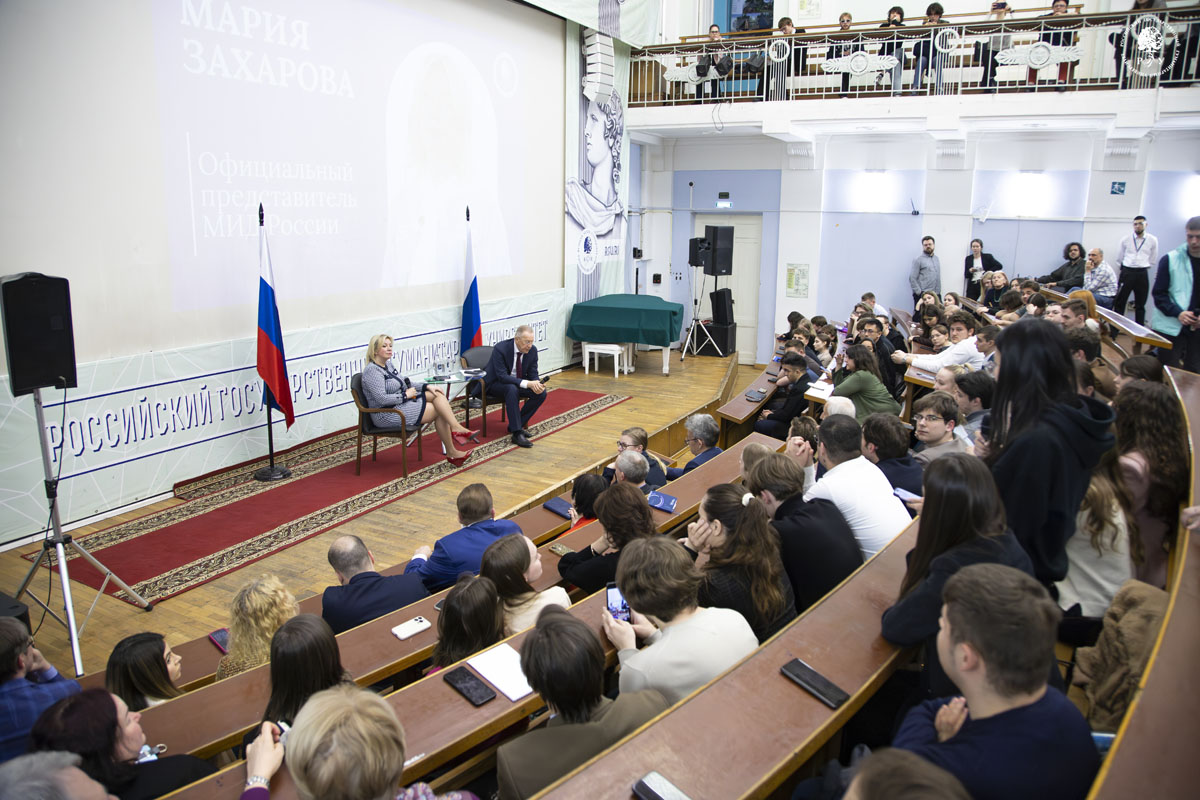
On April 27, an open dialogue with students took place at the Russian State University for the Humanities featuring Maria Zakharova, Director of the Information and Press Department of the Russian Ministry of Foreign Affairs and official representative of the foreign policy agency.
"We are constantly told that one of the indicators of a nation's greatness is progress — how far the country moves forward in line with overall development. But the question is different: progress does not have only a 'plus' sign. Progress can also have a 'minus' sign — recall the expression 'progressive disease.' Civilizational potential is not only the level of scientific, technological, and industrial development. It is also a potential with a 'plus' sign: does everything that exists in the country lead to the development of the human being — or already to degradation?" shared Maria Zakharova, speaking about the criteria for assessing the development of states and the role of value orientations in the modern world.
As an example of immense civilizational, administrative, and economic potential, the Roman Empire was cited, which, despite all its merits — economy, science, governance system — ultimately ceased to exist because its value orientations ceased to contribute to human development and began to lead to degradation.
Maria Zakharova paid special attention to the topics of technological development and international cooperation, highlighting nuclear energy as one of the key areas. According to the Director of the Information and Press Department of the Russian Ministry of Foreign Affairs, this is not just a high-tech industry, but a comprehensive achievement that unites science, industry, education, and managerial competencies. It is nuclear energy that is one of those fields in which Russia not only maintains leadership positions but is also able to offer the world unique, well-considered solutions, providing a full cycle — from design and construction to personnel training and long-term project support.
Expanding on the theme of global changes, the speaker emphasized the transformation of the very structure of international relations, noting that the modern world is increasingly moving away from the familiar geographic logic of forming alliances and transitioning to a polycentric model, in which states can simultaneously belong to different centers of attraction — not only territorial ones but also those based on shared interests. As examples, international associations formed on the basis of economic, political, and cultural ties were cited. According to Maria Zakharova, such an approach, in which countries build partnerships across multiple directions simultaneously, may reflect the logic of the future world order.
Maria Zakharova specifically addressed the problem of the identity crisis, calling it one of the key challenges of our time. In her words, the loss of connection with one's own historical and cultural foundations gradually erodes the internal foundation of the state, without which neither sustainable development nor effective governance is possible.
In answering questions about current international crises, it was noted that Russia employs the full spectrum of diplomatic tools to reduce tensions and seek solutions within the framework of international law — which is directly related to the changing nature of diplomacy itself: today it extends far beyond the traditional political agenda and encompasses issues of food, biological, and technological security.
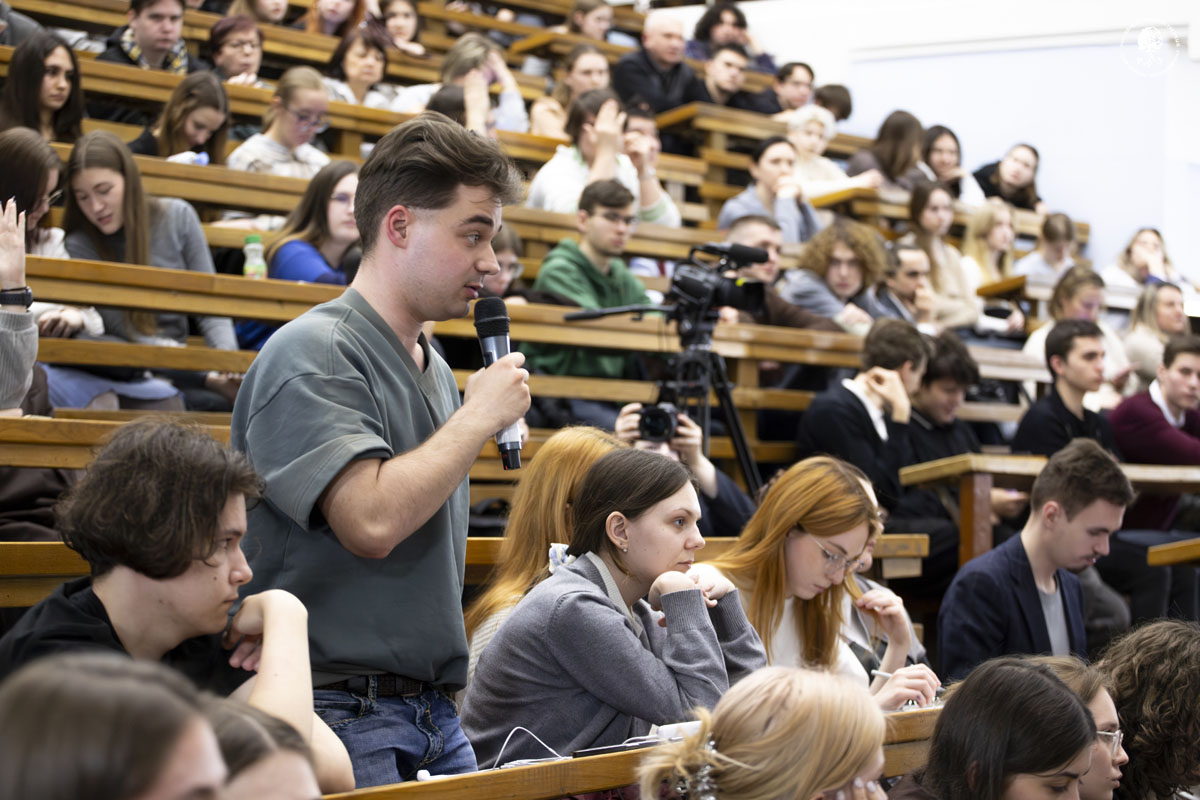
Considerable interest from the audience was aroused by questions related to professional self-determination and development. Students asked how to maintain interest in their chosen profession amid an unstable international situation, not lose motivation, and find their place in a rapidly changing world. In responding, Maria Vladimirovna emphasized that the demand for specialists is determined not only by narrow specialization but also by breadth of outlook, the ability to adapt to new conditions, and the capacity to work with information — because these qualities allow one to maintain professional stability and continue to develop even in difficult periods.
The Russian State University for the Humanities expresses its gratitude to Maria Zakharova for her participation in the meeting with students and for an open, substantive conversation.