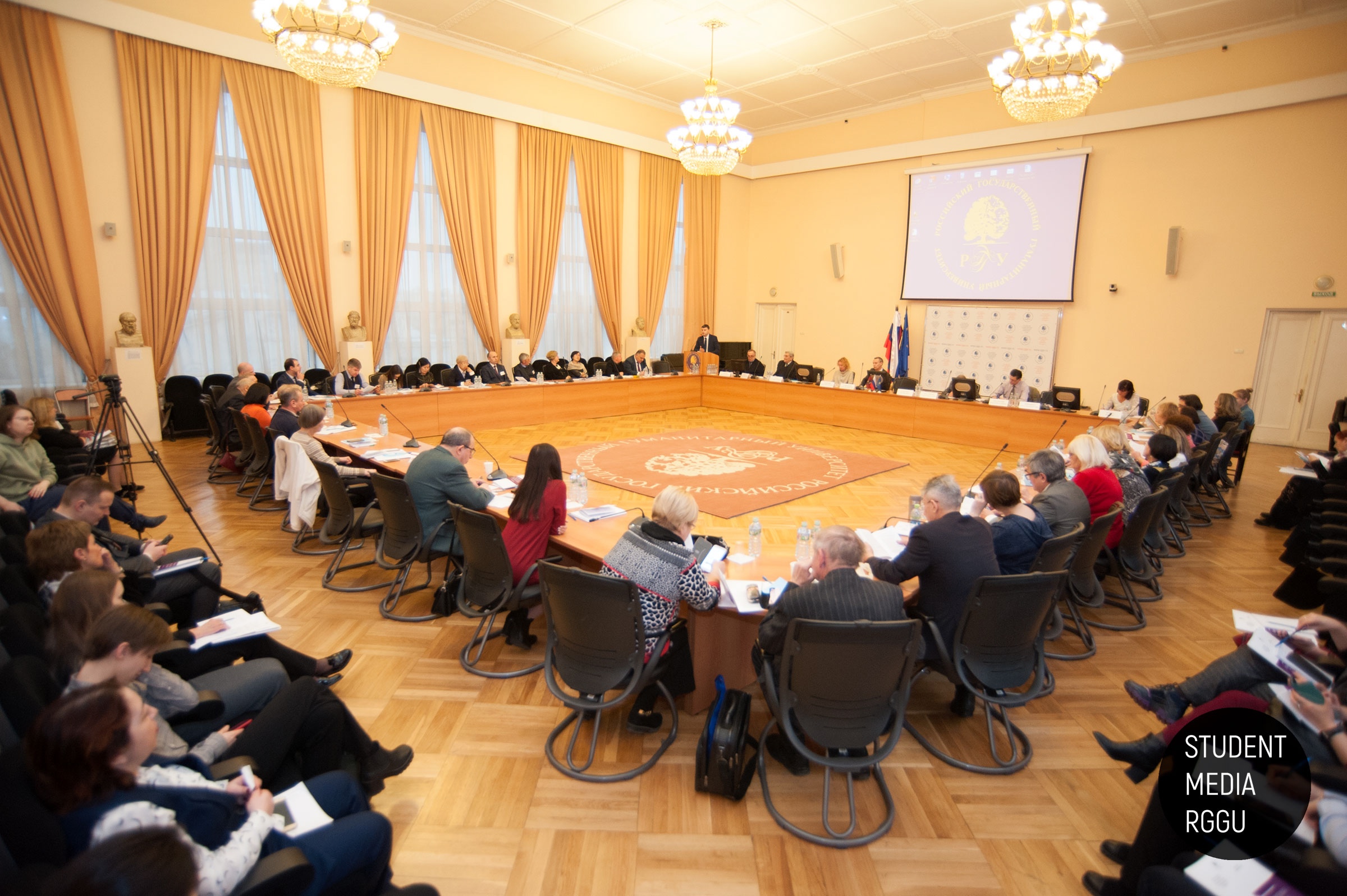
The strategy for the promotion of the Russian language abroad and the preservation of linguistic diversity in Russia became the main topics of discussion at the International Conference "Language Policy in Russia and Abroad", which took place on December 6 at RSUH.
In his welcoming speech, Rector Bezborodov expressed his gratitude to Dr. Magomed Omarov, Director of the Center for the Study of Ethno-Political and Ethno-Cultural Processes for a series of international conferences held in 2019 and dedicated to implementing the State National Policy Strategy until 2025. “This Conference is a worthy conclusion to the International Year of Indigenous Languages declared by UNESCO,” Rector noted.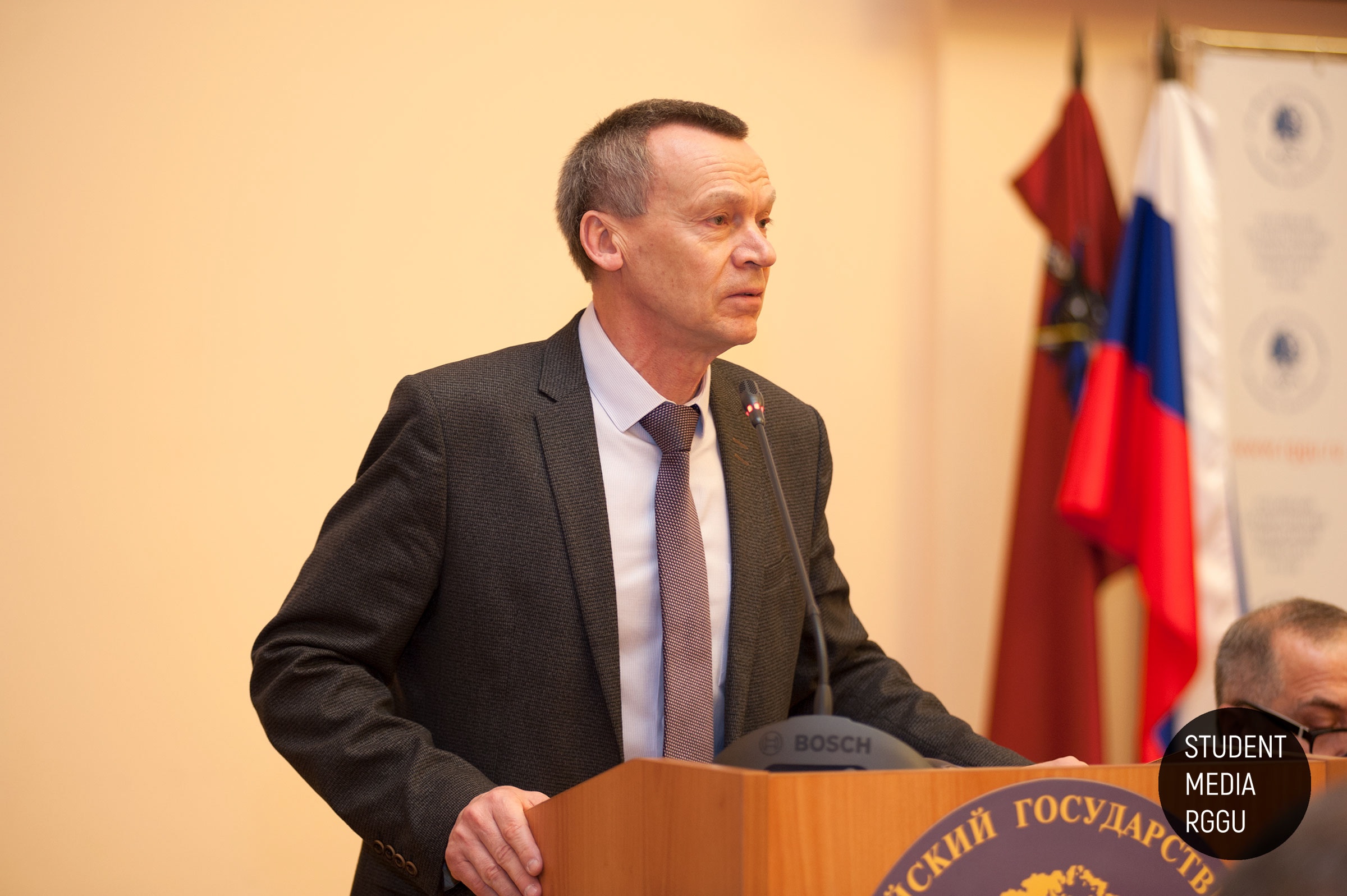
Note: the UN General Assembly declared the period 2022-2032 to be the International Decade of Indigenous Languages.
Dr. Vladimir Alpatov, Member of the Russian Academy of Sciences, Head of the Research Center for National-Language Relations at the Institute of Linguistics of RAS, and Dr. Sergey Baakh, Chief Advisor to the Office of the President on Domestic Policy, also addressed the Conference participants with a greeting.
Dr. Olga Pavlenko, First Vice-Rector for Research, delivered a report on strategies for promoting the Russian language abroad and the innovative experience of RSUH in teaching Russian in the countries of the Middle East and Central Asia.
Dr. Nail Mukharyamov, Head of the Department of Sociology, Political Science and Law of the Kazan State Power Engineering University, noted the need to develop a single normative document that would clearly articulate the goals and objectives of the language policy of the Russian Federation.
Dr. Sergey Dmitrenko, Vice-Rector for Academic and Creative Work of the Gorky Literary Institute, spoke about the importance of literature as a powerful tool for implementing language policy in modern Russia. To popularize literary works created in the languages of the peoples of Russia, groups of translators from the Tatar, Bashkir and Udmurt languages were recruited by the House of National Literatures, and a bookstore of literature of the peoples of Russia was re-established.
Dr. Olga Kazakevich, Head of the Laboratory for the Study and Preservation of Indigenous Languages at the Institute of Linguistics of RAS, Associate Professor at the Institute of Linguistics of RSUH, paid special attention to the issues of preserving the languages of the peoples of Siberia, the Far East and the north of the European part of the country. Many peoples of Siberia are switching to Russian, which is leading to the disappearance of minority languages. A study commissioned by the FADN, identified 150 autochthonous languages and 10 languages spoken by migrants. At the same time, the number of citizens who recognize a particular language as their native does not coincide with the number of citizens who speak this language.
According to the speaker, in order to slow down the process of language shift, it is necessary to motivate people to learn languages, as well as to introduce the best international methods to support endangered languages, including the academic presence of such languages in preschool. All this needs to be done while taking into account the local variant of the language in the ethno-local group, which necessitates the training of qualified language-teaching cadre.
Dr. Andrei Shluinsky, Deputy Director of the Institute of Linguistics, noted that every 10 years we lose, on average, one language. Therefore, it is necessary to develop aa academically sound state program for the preservation of languages.
Dr. Edleise Mendes, Professor of the Federal University of Bahia, made a presentation "Trends and Issues of Multilingualism", in which she spoke about the mission of the UNESCO Chair on Language Policy for Multilingualism. The Chair consists of 23 members from 13 countries on 4 continents, including RSUH. One of the most important issues in the study and preservation of linguistic diversity is the digitalization of languages and the definition of linguistic rights.
Dr. Monica Perotto, Associate Professor of the Department of Modern Languages, Literatures and Cultures of the University of Bologna, dedicated her presentation to the main principles and directions of the language policy of Europe and Italy, and also shared her unique experience in preserving autochthonous languages in the European space.
Dr. Zabotkina, Vice-Rector for International Cooperation of RSUH, made a presentation “The Role of Multilingualism in Ensuring Sustainable Development of Society in the 21st Century”, in which she recalled the task set by the state, which are to double the number of foreign students studying in Russia by 2024. According to her, the export of education in Russian is an important element of the language policy. Multilingualism is not only enriching in the spiritual sense, it is economically beneficial: international companies that respect the languages and customs of the countries where they operate, achieve the greatest business success. The values of multiculturalism and inclusiveness are consonant with the values of sustainable development.
At the end of the plenary session, Dr. Igor Isaev, Director of the Institute of Linguistics of RSUH, made a historical overview of the dialects of the Russian language and described their current state. The section "Language policy of the Russian Federation” examined the dynamics of the language situation in some regions of the Russian Federation (Tatarstan, Dagestan, Bashkiria, Buryatia, Sakha (Yakutia), Tyva and Khakassia). The participants discussed the issues of legislative support of the language policy regarding the languages of the peoples of Russia, the normative regulation of bilingual legislation in some subjects of the Russian Federation.
The work of the section "Languages in the Information-Related and Political Aspect" was dedicated to the study of the role of the media in preserving the linguistic diversity of Russia. The topics discussed were variability of the language-preferential policy in the field of education in the ethnic republics, languages of the peoples of Russia in the media space, and preservation of the language in the context of information security.
The participants of the section "Language Policy and Education" focused their attention on the role of the Russian education system in ensuring linguistic rights of citizens. The speakers pointed to the need for state support for the creation of textbook and dictionaries of minority languages, as well as the importance of using international experience in the field of preserving linguistic diversity.
Organizer: Center for the Study of Ethno-Political and Ethno-Cultural Processes of RSUH.


